
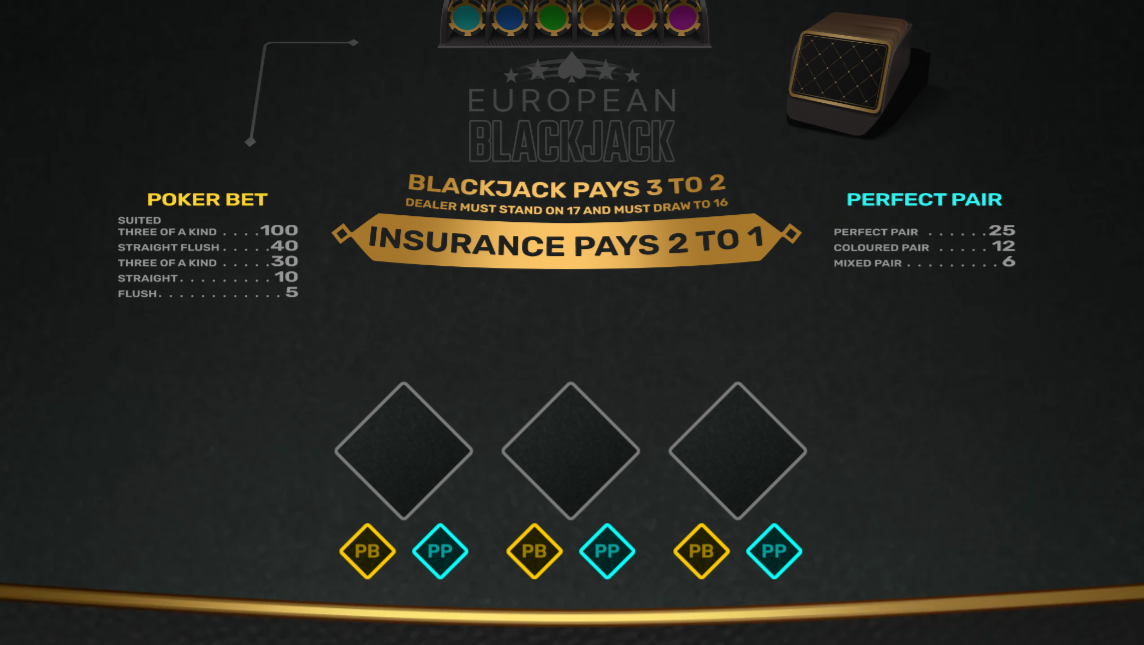
Playing European Blackjack: european rules, american perspective
European Blackjack is classic blackjack, with a couple of important rule differences that change strategy and the way the game feels at the table. If you are playing from the USA, the most convenient way to get acquainted with this version is in demo format, and the page https://www.cherrygoldcasino.com/us/game-demo/european-blackjack/ gives you the opportunity to practice calmly without risk. In the European version, the dealer does not have a hole card from the very beginning, there is a special approach to doubling and splitting pairs, and the balance of odds is slightly different compared with the American variant. All this makes the game interesting for those who want to go beyond the usual “Vegas-style” blackjack while still keeping the familiar 21-point mechanics.
What Is European Blackjack for US Players
European Blackjack is a variation of blackjack in which two decks are usually used and the no hole card rule applies: the dealer receives only one open card and draws the second one only after all players have completed their moves. Unlike a number of American tables, doubling is more often restricted here (often only on 9–11), and some pairs (for example, 4, 5, and 10) are officially prohibited from being split. With the right rules, the theoretical return to player (RTP) can reach about 99.6%, meaning the house’s mathematical edge remains quite small compared with many other gambling games.
For players from the USA, European Blackjack is interesting for several reasons at once. First, it gives a different angle on a familiar game: the order of the dealer’s actions changes and the perception of risk when doubling against an ace and a ten is different. Second, a game with two decks and a fixed set of rules allows you to feel the structure of the deals better and to train basic strategy without unnecessary “add-ons.” Third, the online format with clear stakes in dollars and a visual interface makes this table convenient both for beginners and for already experienced card fans.
Main Parameters of European Blackjack
From the player’s point of view, European Blackjack is first and foremost a set of specific numbers and rules, and only then atmosphere and graphics. Two decks of 52 cards are usually used, the dealer does not take a hidden card until the players have finished their actions, and blackjack (21 with two cards) is paid at the standard ratio of 3:2. In many versions the dealer is required to stand on soft 17 (A+6), and doubling is allowed only on totals of 9–11, although the exact settings depend on the table.
These parameters may seem minor, but they are precisely what form the final math. The stricter the restrictions on doubling and splitting, and the more often the dealer draws on soft 17, the higher the house edge becomes. Even so, with careful strategy and discipline, European Blackjack remains one of the most “player-friendly” games among card entertainments.
Comparing European Blackjack with the American Version
Now, it is important to understand exactly how European Blackjack differs from the familiar American format that is more often found in live casinos in Las Vegas or Atlantic City. Under American rules, the dealer most often receives two cards at once: one face up and one face down (the hole card), and with an upcard of ten or an ace the dealer checks in advance whether they have blackjack. If blackjack is present, the hand ends immediately and players do not have time to double or split hands that are already doomed to lose. In European Blackjack, the dealer does not check anything until all players have made their decisions, and this is the key difference.
Because of this approach, the house advantage in the European version is slightly higher: estimates put the house edge about 0.05% higher than at a classic American table under similar conditions. In practice, however, this difference is small, and European Blackjack still looks very favorable compared with most bets in roulette or slots. At the same time, the game feels a little more “sharp”: when you double 11 against the dealer’s ten, the possibility of the dealer’s blackjack always lingers in your mind.
Key Practical Differences
For a player from the USA, it is important to keep these differences in mind, because habits formed at an American table are not always equally effective in the European version. Where you would “automatically” double or split a pair there, here it is sometimes better just to hit or stand. Moreover, basic strategy charts for European Blackjack differ slightly from standard diagrams for American rules, especially in situations against a dealer’s upcard of ace or ten.
At the same time, the basic principles — counting points, aiming for 21 without busting, and beating the dealer’s total — remain exactly the same. European rules add not so much chaos as nuance to risk evaluation. Therefore, if you are moving from the American format, it is useful at least once to carefully reread a brief guide specifically for European Blackjack and practice a little in demo mode.
How a European Blackjack Hand Plays Out
To feel confident at a European Blackjack table, it is important to clearly understand the sequence of actions. A hand is built on comparing your hand with the dealer’s hand: the task is to reach a total closer to 21 than the dealer without exceeding that value. Cards from 2 to 10 are worth their face value, face cards count as 10 points, and an ace can be counted as 1 or 11 — whichever is more beneficial at the moment. You can play in a single “box” or occupy several spots at the table, but a beginner is better off starting with one box so as not to overload their attention.
In European Blackjack, the dealer deals two cards to the player (or players) and one face-up card to themselves. You then make your decisions — to hit, stand, double your bet, or, if allowed by the rules, split a pair. After all decisions have been made, the dealer draws cards until reaching the established threshold (usually at least 17 points). If the dealer busts (goes over 21), all hands still in play win.
Basic Decisions for a Beginning Player
Although full basic strategy is a large table, a beginning European Blackjack player only needs to remember a few principles. First of all, you should not take an extra card if you already have a “hard” 17 or higher: the risk of busting is too great, and the expectation from an additional card is negative in almost all situations. Conversely, with a total of 11 or lower an extra card is almost always safe, and with 10–11 against a weak dealer card, doubling often looks reasonable if the rules allow it.
A separate block of decisions is related to the ace: “soft” hands (for example, A+6, A+7) allow you to hit or double more aggressively, because the ace can “turn” from 11 into 1 if you receive a high card. At the same time, in European Blackjack it is important to be more careful with doubles against a dealer’s upcard ace or ten, especially given the no hole card rule: the dealer’s potential blackjack makes such situations more risky. Finally, decisions about splitting pairs should be made with European restrictions in mind: do not expect to be allowed to split 10–10 or 5–5 as freely as at some American tables.
Pros and Cons of European Blackjack Online ✅❌
European Blackjack has obvious strengths for a US player: high theoretical return, clear logic, a moderate number of decks, and the ability to finely tune strategy to the specific table rules. On the other hand, the no hole card rule, restrictions on doubling and splits, and a slightly higher house edge compared with the American version require greater discipline. If you treat the game as entertainment with an analytical element, the pros clearly outweigh the cons.
- ✅ High RTP (around 99.4–99.6%) and a relatively small mathematical house edge compared with other games.
- ✅ Clear rules and logical hand structure, convenient for learning and practicing basic strategy.
- ✅ Interesting tactical decisions due to the absence of a hole card and stricter restrictions on doubling and splitting.
- ✅ Convenient format for online play with transparent dollar stakes, especially in demo mode.
- ❌ Slightly higher house edge compared with the American version under similar table conditions.
- ❌ The absence of a hole card increases the risk of doubles and splits against the dealer’s ace and ten.
- ❌ Not all familiar techniques from American blackjack are equally effective; strategy adjustment is required.
- ❌ Strict bankroll discipline is mandatory, as emotional decisions can quickly lead to unnecessary losses.
FAQ ❓
How does European Blackjack fundamentally differ from regular blackjack in Vegas?
The main difference is that the dealer does not take the second, face-down card until all players have finished making their decisions, whereas in the classic American format the hole card is on the table from the very beginning of the hand.
Is it possible to “beat” European Blackjack with some betting system?
Any betting progressions — from simple doubling after a loss to complex schemes — do not change the house’s mathematical edge, but only redistribute risk over time, so promises of a “guaranteed win” in blackjack are a myth.
Where is it best for a US player to start getting acquainted with European Blackjack?
The safest start is demo mode: first, it makes sense to play several dozen hands without real bets to feel the rhythm of the game, the dealer’s behavior, and the differences from the American format.